
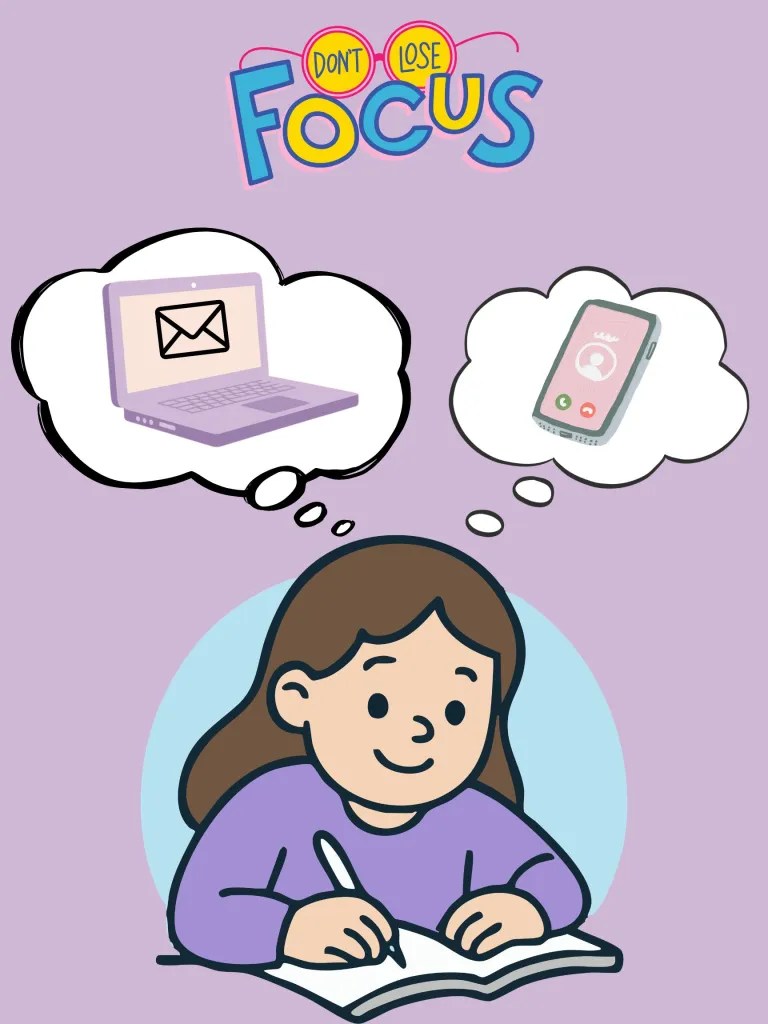
For the longest time, I beat myself up every time my attention drifted. If I found myself opening a new tab, checking notifications, or scrolling through feeds instead of locking into what I was supposed to be doing, I assumed it was a personal flaw. I blamed a lack of discipline and figured social media algorithms were simply smarter than my willpower. Reading Chapters 10 and 11 of Johann Hari’s Stolen Focus completely flipped that perspective for me. Hari explains that distraction is not always just about notifications or bad habits. It can also be connected to stress, feeling overwhelmed, and living in a constant state of rush. When your brain is always focused on what needs to happen next, slowing down and concentrating on one thing can become much harder.
This idea made me think about how often I feel like I am rushing through my day. Between school, work, social media, emails, texts, and everything else, there is almost always something asking for my attention. Even when I sit down to work, part of my brain might still be thinking about other things I need to do. Research supports this connection between stress and attention. Liston, McEwen, and Casey found that prolonged stress can affect the brain systems involved in attention and cognitive control. This helped me realize that struggling to focus is not always as simple as just needing more discipline. Sometimes, there are other things happening in the background that make focusing harder.
I also started thinking about why I automatically reach for my phone whenever I feel overwhelmed or bored. If I am working on an assignment and get stuck, it is so easy to open TikTok or Instagram for a few minutes. Those few minutes can quickly turn into twenty. At the time, it feels like I am just being distracted, but maybe part of me is also looking for an easy break from whatever I am stressed about. The American Psychological Association explains that constantly being connected to technology can add to stress, especially when we are constantly checking notifications and other updates. This feels very familiar to me because even when I am trying to focus, part of my attention can still be waiting for the next notification or message.
This does not mean I can blame my phone every time I get distracted. I still have control over how I use it. However, thinking about distraction this way has made me question the idea that I am simply “bad at focusing.” Sometimes, scrolling is my way of taking a quick break when I already feel mentally overloaded. The problem is that it doesn’t always feel like a real break. Instead, I end up coming back to my work feeling like I have even more things competing for my attention.
Because of this, I have started thinking about focus differently. Instead of only trying to have more self-control, I want to pay more attention to the environment I am creating for myself. Putting my phone away, taking an actual break, or giving myself time to focus on one thing without constantly checking something else might be more helpful than just telling myself to “try harder.”
I used to think being productive meant always doing something. Now, I think part of being productive is giving yourself enough space to truly think. My biggest takeaway from Stolen Focus is that getting distracted does not automatically mean I am lazy or lack discipline. There are a lot of things competing for our attention every day and understanding that is the first step toward figuring out how to take some of that attention back.


Leave a Reply