
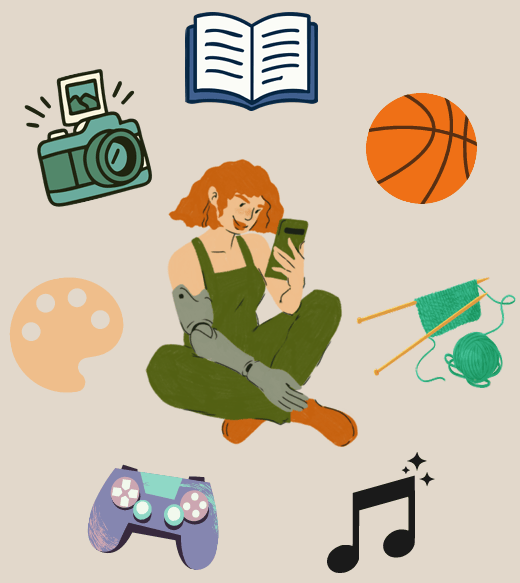
I used to know exactly who I was when asked about my hobbies. As a kid, the list came effortlessly. Biking, reading, spending hours outside. But with each passing year, my answer grew more routine. Now, when the question comes up, my mind goes blank. I’ve realized that somewhere along the way, my free time was quietly overtaken by social media. Not only has my “scroll time” become a habit, but after becoming my main pastime, it has started to feel like an unenjoyable chore. I still find myself bored even after scrolling for hours. Despite that, I never find myself trying new things or picking up new hobbies to fill my free time. What spell does my phone have over me?
The problem isn’t us reaching for our phones in a moment of boredom, but rather why we reach for them. We often view boredom as something that needs an instant fix when, in reality, being bored means our brains are looking for a different form of engagement. According to psychology researcher Dr. Katy Tam, “research shows that while people fast-forward or skip videos to avoid boredom, this behavior actually increases boredom.” When we drown out that signal by constantly swiping past videos in search of something better, we never give our minds a chance to fully engage with anything. What feels like a quick mental break turns into “fake rest” that burns through our downtime without giving us any real satisfaction. Reading this, I’ve started to see that engaging in longer-form content might feel less like a chore than swiping every 10-15 seconds.
When I’m unengaged, my phone is all I think about, but the moment I find something that truly holds my attention, the “craving” vanishes. For instance, this summer I found myself so immersed in a book that I lost track of time. Almost 2 hours had passed, a typical amount of time for my scrolling, yet I didn’t feel guilty when I put my book down. I felt rewarded. This moment gave me hope to begin a new hobby. The next time I came home from work, looking to relax and enjoy my free time, picking up a book seemed surprisingly difficult. After reading The Flow State: The Science of the Elusive Creative Mindset That Can Improve Your Life, I understood why. As the article points out, entering a flow state requires a balance. “If a task is too easy, it fails to absorb our attention… If it is too hard, we start to feel stressed.” Social media is designed to feel effortless and mindless, making it the easier choice at the end of a long day. Reading requires just enough of that initial effort to turn us away.
This difference between mindlessly scrolling and deep focus is exactly what journalist Johann Hari explores in his book Stolen Focus: Why You Can’t Pay Attention—and How to Think Deeply Again. Hari points out that our focus is being actively disrupted by systems designed to keep us constantly switching tasks. When we default to scrolling after a tiring day, we feel a heavy “switch-cost” that affects our mental energy and makes focus feel extremely difficult. This shift has made rebuilding my ability to concentrate a priority in my life. I want to find something that deeply engages me rather than screen time as a default relaxation.
I have always been aware that my high screen time isn’t any good for me, but understanding the “why” behind it has given me a whole new perspective. Breaking this habit is nearly impossible without understanding why my brain is so attached to scrolling. Exploring new hobbies isn’t something I just want to do; it’s an essential step in taking back control over myself. I am hopeful that next time someone asks about my free time, I can share a list I am genuinely excited about.


Leave a Reply